State budget, taxes & fiscal credibility
58 pts apartCalifornia's budget swings between surpluses and multibillion-dollar deficits because it leans so heavily on income taxes from a few top earners. The candidates split over whether to close the gap mainly by raising revenue or by cutting spending and taxes.
Last updated June 9, 2026
How would each close the deficit and approach taxes?
- Xavier Becerra (32/100) — Leans on raising revenue from high earners and protecting spending, but stops short of a wealth tax and stresses budget discipline.
- Steve Hilton (90/100) — A flat tax with a large exemption, a roughly $60 billion tax cut offset by a return to pre-pandemic spending, and no new taxes place him firmly at the cut-spending-and-taxes pole.
The situation in California
California's general fund depends on the personal income tax for about 58 cents of every dollar, and much of that comes from a small number of high earners whose capital gains income rises and falls with the stock market. That reliance produced a $55 billion surplus in 2022–23 and then three straight deficits ($27 billion, $55 billion, and $15 billion) that the state closed with spending cuts, borrowing, and reserve withdrawals. The Governor's May 2026 revision proposed a balanced 2026–27 budget, but the Legislative Analyst's Office credits a one-time surge in capital-gains taxes tied to the AI stock boom and still projects operating deficit of about $10 billion a year through 2029–30. California's top income-tax rate, 14.4% on the highest wages, is the nation's highest, though its overall tax burden per resident sits closer to the middle of the high-tax states.
- 48th of 50
- Tax competitiveness rank (2025)
- 14.4%
- Top tax rate on wages
- ~half
- Income tax from the top 1%
- 58%
- Income tax's share of the budget
- $55B
- 2024–25 budget shortfall
- $23B → $11B
- Rainy day fund
The Tax Foundation rates the design of California's tax code (its rates, brackets, and complexity) 48th, ahead of only New Jersey and New York (1st = most competitive). This scores how the code is structured, not what a typical resident pays, which sits nearer the middle.
The statutory 13.3% income-tax rate plus the 1.1% disability-insurance payroll tax on high wages; the highest state rate in the country.
California's top 1% of earners paid close to half of all personal income taxes in 2021, so revenue rises and falls with their stock-market gains.
Personal income tax supplies about $126 billion of the $216 billion general fund in 2025–26.
The largest of three straight deficits, two years after a $55 billion surplus.
The main budget reserve fell by about half from 2023–24 to 2025–26 as the state drew it down to balance the books.
California's budget swings are smaller as a share of spending
General Fund revenues and transfers minus expenditures, by fiscal year (% of expenditures)
Bars above zero are years when revenues and transfers exceeded General Fund expenditures; bars below zero are deficits. Scaling by annual expenditures makes 2000s and 2020s swings comparable despite inflation and budget growth. The same Department of Finance rows equal a $32.4 billion surplus in 2020–21, a $16.6 billion deficit in 2022–23, and a $2.5 billion current-year deficit estimate for 2025–26. These are actual or estimated year-end results, so they differ from the projected gaps the state set out to close with borrowing, deferrals, cuts, or reserves.
California has drawn its rainy day fund down by half
Budget Stabilization Account balance at fiscal year-end ($ billions)
The state pulled $7.1 billion from the fund in 2025–26 alone to help balance the budget, leaving its main reserve at roughly half its 2023–24 level.
California's top income-tax rate is the highest in the country
Top marginal state individual income-tax rate, 2024 (%)
Bars show each state's statutory top rate. Counting the 1.1% disability-insurance payroll tax, California's all-in top rate reaches 14.4% on wages above about $1 million. Texas, Florida and Nevada levy no state income tax.
But California is not the most-taxed state per resident
State and local tax collections per capita, FY 2023 ($, selected states)
California's high top rate does not make it the most-taxed state overall: among all 50 states it collects $8,942 per resident (eighth) and ranks about 11th by taxes as a share of income. The dashed line is the U.S. average ($7,038); two no-income-tax states are shown for contrast.
Most state money comes from one volatile source
2025–26 general fund revenues and transfers by source ($ billions)
The personal income tax brings in about $126 billion of the $216 billion in general fund revenues and transfers, more than the sales tax and corporation tax combined. Because so much of it comes from top earners' capital gains, revenue swings sharply with the markets.
What's been tried
To close three years of deficits, the state relied heavily on one-time fixes. The Legislative Analyst's Office reports that borrowing covered about two-thirds of the 2025–26 budget solution, including accounting shifts and internal loans, and that the state's rainy day fund was drawn down from about $23 billion in 2023–24 to roughly $11 billion in 2025–26. The Governor's May 2026 revision proposed a return to balance, but the LAO attributes the improvement almost entirely to a jump in income-tax collections driven by the AI-fueled stock market, and it warns that a market reversal like the dot-com bust could reopen a gap as large as $100 billion.
Where they differ
The clearest contrasts, sub-issue by sub-issue.
| Sub-issue | Becerra (D) | Hilton (R) |
|---|---|---|
| Income tax | Tax the investment and 'passive' income of the wealthy more like wages; keep the progressive brackets. | Exempt the first $100,000 of income, then a flat 7.5% rate on earnings above it. |
| Closing the deficit | Raise steady revenue and limit corporate tax credits; protect Medi-Cal and other programs. | Cut taxes by roughly $60 billion and return spending to pre-pandemic levels. |
| Taxing wealth | Backs higher taxes on billionaires but rejects a one-time billionaire wealth tax as an unstable, one-off source. | Opposes new taxes and pledges to protect Proposition 13's property-tax limits. |
| Waste & fraud | Points to running the federal HHS budget; stresses forecasting conservatively over spending surpluses. | Created 'CAL DOGE' and claims roughly $80 billion a year is lost to fraud, waste and abuse. |
| Business taxes | Floats fees on large employers whose low-wage workers rely on Medi-Cal. | Scrap the $800 minimum franchise tax and exempt tips from state tax. |
Side by side
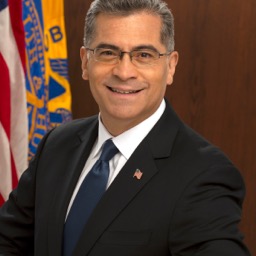 Xavier BecerraD · Democrat
Raise steady revenue by taxing the wealthy's investment income, and protect programs rather than cut them.
Becerra argues California needs predictable, ongoing revenue instead of one-time measures, and he would raise it by taxing the investment and other 'passive' income of high earners more like wages. He says billionaires should pay more but rejects a one-time wealth tax on billionaires, calling it a single windfall rather than a steady source. He has pointed to limiting corporate tax credits as a near-term tool, pledges to protect Medi-Cal funding, and cites running the federal health department's budget as proof he can manage the state's. He has not released a detailed plan to close the projected deficit.
- Wants predictable, recurring revenue rather than one-time tax measures
- Would tax the investment and 'passive' income of high earners more like wage income
- Backs higher taxes on billionaires but rejects a one-time billionaire wealth tax
- Floated limiting some corporations' use of tax credits to raise revenue
- Pledges to protect Medi-Cal funding, raising revenue if needed
- Cites running the federal HHS budget, which he says topped California's
- Reported: Becerra has not published a detailed deficit-reduction plan; the corporate-tax-credit idea comes from his debate remarks, and several specifics remain unstated.
Sources
- News reportEveryone ganged up on Democrat Becerra in the last governor's debate. He seemed to love it.— CalMatters · May 15, 2026
“restrict some corporations’ use of tax credits”
Accessed June 7, 2026 - News reportIn California Governor's Race, Xavier Becerra Walks Away From Single-Payer— Capital & Main · May 21, 2026
“maintain coverage continuity”
Accessed June 7, 2026 - Candidate statementXavier Becerra on fighting Trump-era policies and leading California— Political Breakdown (KQED/PBS) · March 3, 2026
“Tax policy has to be predictable”
Accessed June 7, 2026 - News report2026 California governor race: Get to know Xavier Becerra— San Francisco Examiner · February 22, 2026
“we’ll find sources that are predictable, reliable, and steady”
Accessed June 7, 2026 - News reportDemocrat Xavier Becerra leverages experience, immigrant roots in bid for California governor— Times of San Diego · May 29, 2026
“I had to balance the budget of a federal Department of Health and Human Services with a budget larger than that of the state of California itself”
Accessed June 7, 2026
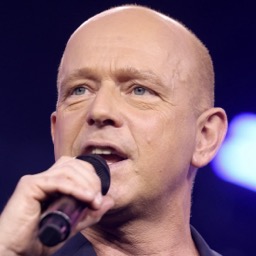 Steve HiltonR · Republican
Cut taxes and spending: exempt the first $100,000 of income, set a flat rate, and shrink the budget.
Hilton says California has a spending problem, not a revenue problem, and points to a state budget that nearly doubled in a decade. His 'Califordable' plan would exempt the first $100,000 of income from state tax and replace the graduated brackets with a flat 7.5% rate above that. His campaign estimates the full plan's static cost at roughly $60 billion and would offset it by returning spending to pre-pandemic levels. He created a 'Cal DOGE' effort that claims roughly $80 billion a year is lost to fraud, waste and abuse, and argues lower taxes will grow the economy and, in time, revenue. He also opposes new taxes and would protect Proposition 13.
- Exempt the first $100,000 of income from state tax; flat 7.5% rate above it
- Frames the deficit as overspending: 'California does not have a revenue problem'
- Offset the roughly $60 billion full-plan tax cut by returning spending to pre-pandemic levels
- Claims about $80 billion a year is lost to fraud, waste and abuse through 'CAL DOGE'
- Argues tax cuts will grow the economy and eventually raise revenue
- Opposes new taxes; protect Proposition 13; scrap the $800 franchise tax
- Reported: Hilton's CAL DOGE effort pegs the loss at roughly $80 billion a year, part of cumulative estimates that have run above $250 billion; both are campaign figures that have not been independently verified, and he has not published a line-item list of the spending he would cut.
Sources
- Campaign siteCAL DOGE Targets Corruption, Fraud and Waste & Will Drive Structural Government Reform— Steve Hilton for Governor (campaign site) · January 28, 2026
“expose corruption, fraud, waste, and abuse in California government”
Accessed June 7, 2026 - Campaign siteSteve Hilton for California Governor: official campaign site— Steve Hilton for Governor (campaign site) · January 1, 2026
“No increase in property taxes”
Accessed June 7, 2026 - Campaign siteA Califordable Tax Plan— Steve Hilton for Governor (campaign site) · January 1, 2026
“California does not have a revenue problem”
Accessed June 7, 2026 - News reportHere's How California's Next Governor Will Change Your Taxes— KQED · April 14, 2026
“eliminating state income tax for Californians earning less than $100,000 and imposing a flat 7.5% tax on earnings over $100,000”
Accessed June 7, 2026 - News reportMassive fraud allegations in California: What we know— Newsweek · January 6, 2026
“at least $250 billion”
Accessed June 7, 2026 - News reportCA Gubernatorial Candidate Steve Hilton Pitches Practical Reset On Taxes, Energy And Immigration— Siliconeer · May 28, 2026
“cutting what he described as an $80 billion”
Accessed June 7, 2026 - News reportRepublican Steve Hilton promises 'real change' in California governor's race— Times of San Diego · May 29, 2026
“first $100,000 would be tax-free”
Accessed June 7, 2026
What changed
- added
Reframed the 21-year surplus/deficit chart as a share of annual General Fund spending, rather than nominal dollars, so older and newer budget swings are comparable.
- added
Added a tax-competitiveness rank to the situation snapshot: the Tax Foundation rates California's tax-code structure 48th of 50, with a note that this differs from the mid-pack tax actually paid per resident.
- added
Added a 21-year chart of the General Fund's year-end surplus or deficit (FY 2005–06 through 2025–26) from the Department of Finance's historical Chart A.
- added
Initial build: sourced budget and tax background with five charts, plus Becerra and Hilton positions on the deficit and taxes.