Cost of living & affordability
74 pts apartCalifornia is one of the most expensive states to live in, and once housing and everyday costs are counted it is tied for the nation's highest poverty rate. The candidates divide over whether to bring costs down with state regulation and public relief or by cutting taxes, fees, and mandates.
Last updated June 9, 2026
How would each make California affordable again?
- Xavier Becerra (18/100) — Treats high prices as a market and policy failure for the state to fix directly, from freezing utility rates to cracking down on price gouging, which puts him near the public-relief pole.
- Steve Hilton (92/100) — Locates the cause of high costs in taxes, fees, and regulation and would lower them by cutting government charges and repealing mandates rather than offering public relief, which puts him at the deregulation pole.
The situation in California
California's cost-of-living index sits about 42% above the U.S. average, second only to Hawaii, and housing is the biggest reason. Under the Supplemental Poverty Measure, which factors in local housing costs, taxes, and government benefits, 17.7% of Californians were in poverty over 2022–2024, tied with Louisiana for the highest share of any state, even though the official poverty rate puts California closer to the middle. A typical home sold for about $915,000 in spring 2026, roughly twice the price of a typical U.S. home. net domestic migration ran to a loss of 216,000 residents in 2024–25, in line with pre-pandemic levels, though births and international arrivals kept the population growing.
- 2nd of 50
- Cost-of-living rank (2026)
- $914,810
- Median home price (Apr 2026)
- −216,000
- Net domestic migration, 2024–25
- $16.90/hr
- Statewide minimum wage
- 70.9¢/gal
- Gasoline tax
- $1.4B/yr
- State refundable tax credits
California's cost-of-living index runs about 42% above the U.S. average, the second-highest of any state behind only Hawaii (1st = most expensive).
A record statewide median sale price, roughly twice the price of a typical mid-tier U.S. home.
More residents moved to other states than arrived from them; births and international arrivals still grew the population.
Effective January 2026; $20 for large fast-food chains since April 2024, among the highest floors in the nation.
Counting all state taxes and fees, the highest in the country, one reason California gas prices stay well above the U.S. average.
The CalEITC, Young Child Tax Credit, and a smaller Foster Youth Tax Credit together return about $1.4 billion a year to low-income workers and families.
California is the second most expensive state to live in
Cost-of-living index, 2026 (U.S. = 100; selected states, California 2nd of 50)
The index is anchored at the U.S. average of 100, so California's 142 means costs run about 42% above the national norm, driven mostly by housing. Only Hawaii is higher, so California ranks second of all 50 states; the least expensive states sit near 86. A representative spread is shown, not all 50.
Counting the cost of living, California is tied for the nation's highest poverty rate
Share of residents in poverty under the Supplemental Poverty Measure, 3-year average 2022–24 (%)
Under the official poverty measure California sits near the middle of the states. The Supplemental Poverty Measure, which factors in local housing costs, taxes, and government benefits, lifts California to 17.7%, tied with Louisiana for the highest of any state and well above the U.S. average of 12.7%. Maine, the lowest, is at 6.7%.
Fewer Californians can afford to buy a home than in 2019
Share of households with enough income to qualify for a typical mortgage, by home price tier (2019 vs 2026)
The Legislative Analyst's Office estimates that about 23% of California households could qualify to buy a mid-tier home in 2026, down from about 31% in 2019; for a bottom-tier home the share fell from about 57% to 46%.
What's been tried
Recent state efforts to ease costs include raising the minimum wage to $16.90 an hour statewide and $20 for large fast-food chains, and expanding refundable income tax credits, mainly the CalEITC (CalEITC) and the Young Child Tax Credit, which together with a smaller foster-youth credit return about $1.4 billion a year to low-income families. A 2026 UC Berkeley study found the fast-food wage raised pay roughly 11% with prices up about 1.5% and no measurable drop in employment. Other state policies pull the other way: the Low Carbon Fuel Standard and a gas tax that rises automatically with inflation, now 70.9 cents a gallon counting all state taxes, help keep California's gasoline among the priciest in the country. The candidates would treat those programs very differently.
Where they differ
The clearest contrasts, sub-issue by sub-issue.
| Sub-issue | Becerra (D) | Hilton (R) |
|---|---|---|
| Overall approach | Use state power to lower prices 'where the market has failed.' | Cut taxes, fees, and mandates so the cost of living falls. |
| Prices & gouging | Crack down on price gouging and 'unjustified rate hikes.' | Blames state taxes and regulation for high prices, and would cut them. |
| Gas & electricity | Regulatory measures to lower electricity and gas costs; freeze utility rates. | Suspend the Low Carbon Fuel Standard for $3 gas; repeal 'climate mandates' on power bills. |
| Help for families | Expand help with childcare and other essential costs. | Tax and fee cuts rather than rebates or new benefits. |
| Diagnosis | Affordability crisis is 'systems that have stopped working.' | Sixteen years of Democratic control made California unaffordable. |
Side by side
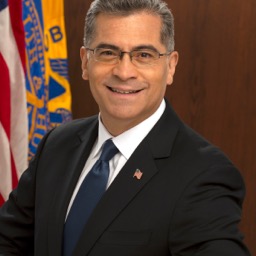 Xavier BecerraD · Democrat
Bring prices down with state power: freeze rates, fight price gouging, and help with essential costs.
Becerra frames California's high costs as a systemic failure rather than a personal one, and says the state should step in to bring prices down. On his campaign site he pledges to use 'the power of the state to lower prices where the market has failed' and to stand up to price gouging and 'unjustified rate hikes.' He has told reporters he would freeze utility rates and home-insurance premiums and pursue regulatory measures to lower electricity and gasoline costs. He centers the message on working families rather than 'those at the top,' and points to his time as U.S. health secretary negotiating lower Medicare drug prices as evidence he can push costs down.
- Calls the affordability crisis a result of 'systems that have stopped working,' not personal budgeting
- Would use 'the power of the state to lower prices where the market has failed'
- Crack down on price gouging and 'unjustified rate hikes'
- Freeze utility rates and home-insurance premiums
- Pursue regulatory measures to lower electricity and gasoline costs
- Expand help with childcare and other essential costs; cites negotiating lower Medicare drug prices
- Reported: The rate-freeze and regulatory specifics come from reporting (Times of San Diego, KQED); his campaign affordability page states the goals but not the mechanisms or their cost.
- Reported: A governor's power to freeze utility rates or home-insurance premiums is limited by the independently elected Insurance Commissioner and the Public Utilities Commission, and the campaign has not detailed the legal path.
Sources
- Campaign sitePriorities: Economy and Affordability— Xavier Becerra for Governor (campaign site) · January 1, 2026
“using the power of the state to lower prices where the market has failed”
Accessed June 8, 2026 - News reportHere's how the candidates for governor would make California more affordable— KQED · May 11, 2026
“freeze utility rates and home insurance premiums”
Accessed June 8, 2026 - News reportDemocrat Xavier Becerra leverages experience, immigrant roots in bid for California governor— Times of San Diego · May 29, 2026
“regulatory measures to lower electricity and gasoline costs”
Accessed June 8, 2026
 Steve HiltonR · Republican
Make California 'Califordable' by cutting the taxes, fees, and mandates that drive up daily costs.
Hilton built his campaign around one coined word, 'Califordable,' arguing that years of Democratic policy made the state unaffordable. His mechanism is to cut what the government charges rather than to send relief. He would suspend the Low Carbon Fuel Standard and refinery rules and cut fuel fees to reach $3 gas, and repeal 'climate mandates that drive up electricity costs' while breaking up PG&E's monopoly to lower power bills. He ties household costs to the cost of running a business in California, so his affordability pitch doubles as a case for deregulation. The income-tax piece of his plan, which would exempt the first $100,000 of income, is detailed on the budget and taxes page.
- Brands the agenda 'Califordable': three-dollar gas, electric bills cut in half, and a home people can afford
- Reach $3 gas by suspending the Low Carbon Fuel Standard and refinery rules and cutting state fuel fees
- Cut power bills by repealing 'climate mandates that drive up electricity costs' and breaking up PG&E's monopoly
- Says cap-and-trade fees add 'about 54 cents per gallon' to gas
- Frames affordability as lowering both household costs and the cost of running a business
- Blames one-party rule: 'California today is what you get when Democrats get everything they want'
- Reported: The claim that cap-and-trade fees add 'about 54 cents per gallon' is the campaign's figure; independent estimates of fuel-program costs vary.
- Reported: 'Cut your electric bills in half' is a goal stated in his remarks; the campaign's electricity page emphasizes repealing mandates and breaking up PG&E rather than restating that figure.
- Reported: The income-tax exemption and flat-rate plan, and its cost, are covered on the state budget and taxes axis.
Sources
- Candidate statementSteve Hilton lays out his plans to make the state 'Califordable' as governor— KPBS · May 6, 2026
“Three-dollar gas, cut your electric bills in half”
Accessed June 8, 2026 - Candidate statementSteve Hilton blasts Democrats for making California unaffordable after 16 years of unchecked power— Fox News · June 7, 2026
“California today is what you get when Democrats get everything they want”
Accessed June 8, 2026 - Campaign sitePolicy: Gas Prices— Steve Hilton for Governor (campaign site) · January 1, 2026
“Suspend the Low Carbon Fuel Standard”
Accessed June 8, 2026 - Campaign sitePolicy: Ending the PG&E Nightmare— Steve Hilton for Governor (campaign site) · January 1, 2026
“Repeal climate mandates that drive up electricity costs”
Accessed June 8, 2026
What changed
- added
Added a cost-of-living rank to the situation snapshot: California is the second most expensive state to live in, behind only Hawaii.
- added
Initial build: sourced cost-of-living background with three charts (cost-of-living index, cost-of-living-adjusted poverty, and home affordability), plus Becerra and Hilton positions on affordability.
- added
Added background on recent state affordability measures (the $16.90 minimum wage, the $20 fast-food wage, and refundable tax credits) and their measured results.