Crime, public safety & behavioral health
56 pts apartCalifornia's violent crime rate runs above the national average but below states like New Mexico and Louisiana, and both violent and property crime fell in 2024 after rising during the pandemic. The candidates divide over how far safety depends on prevention and treatment versus tougher enforcement and restored prison capacity.
Last updated June 9, 2026
How would each approach crime and public safety?
- Xavier Becerra (30/100) — His stated approach is prevention- and treatment-first and he opposes criminalizing homelessness, but his attorney-general record on police transparency and the lack of a crime platform keep him short of the progressive pole.
- Steve Hilton (86/100) — His program is enforcement across the board: reopen prisons, roll back realignment, back Proposition 36, and clear encampments. That places him near the enforcement pole, with a genuine rehabilitation and treatment plank pulling him back slightly.
The situation in California
California's violent crime rate was about 35% above the national average in 2024, though it ran below states such as Alaska, New Mexico and Louisiana. Violent crime rose through the pandemic and peaked in 2023; in 2024 it fell roughly 6%, and reported property crime dropped to one of its lowest levels in decades, even as retail theft stayed a political flashpoint. Opioid overdose deaths, driven by fentanyl, climbed almost every year to a record near 7,900 in 2023, then fell about 30% in 2024. The state's prison population has dropped about 47% from its 2006 peak of roughly 173,000 after a decade of sentencing changes.
- 486 / 100k
- Violent crime rate (2024)
- 1,666
- Homicides (2024)
- ~7,900 (2023)
- Opioid overdose deaths
- 91,556
- People in state prison
- ~15%
- Prop 36 first-year treatment
- 2,421
- CARE Court petitions
About 35% above the U.S. average of 359 per 100,000, but below states such as Alaska, New Mexico and Louisiana (FBI figures).
A rate of about 4.3 per 100,000, down roughly 10% from 2023 and about 29% below the 2021 pandemic peak.
A record, after deaths more than doubled since 2019; they fell to about 5,500 in 2024, the first drop of the fentanyl era.
As of May 2024, down from a 2006 peak of more than 173,000 after realignment and Proposition 47.
Of about 9,000 people charged with treatment-mandated felonies in the first six months, nearly 15% chose treatment and 25 people completed it.
Filed through July 2025, well short of the 7,000–12,000 Californians the state projected would qualify.
Violent and property crime both fell in California in 2024
Reported crime per 100,000 residents, California, 2010–2024 (CA DOJ)
Both series are rates per 100,000 residents, so they share one scale. Violent crime rose from 2019 to a 2023 peak and then fell about 6% in 2024; reported property crime has drifted down to its lowest level in decades. Figures are from the California Department of Justice, which notes not every agency filed a full year of 2024 data; the FBI's national tally puts California's 2024 violent rate slightly higher, at 486, a methodology difference.
California's violent crime rate is above the U.S. average, below several states
Violent crime per 100,000 residents, 2024 (FBI; states above California plus large-state peers)
This uses the FBI figure for California (486 per 100,000) so every state is measured the same way; California's own justice department counts a slightly lower 480.3, the figure in the trend chart above. The rate ran about a third above the U.S. average of roughly 359 and topped large states like Texas and New York. The five states shown above California — Alaska, New Mexico, Tennessee, Arkansas and Louisiana — are the only states with a higher rate, though Washington, D.C., a city rather than a state, was higher still. Rates, not raw counts, are shown because California's large population would otherwise dominate any total; Florida is left out because the FBI had only limited 2024 data for it.
California's prison population is roughly half its 2006 peak
People in California state prisons, selected reported snapshots
The state prison population fell from more than 173,000 at its 2006 peak to 91,556 in May 2024, a drop of about 47% after realignment, Proposition 47, and later sentencing changes. The chart uses two directly reported snapshots rather than filling in intervening years.
California's opioid overdose deaths fell in 2024 after a record 2023
Opioid overdose deaths, California, by year
Opioid overdose deaths more than doubled between 2019 and 2023 as fentanyl spread, then fell about 30% in 2024, the first decline of the fentanyl era. Source: KFF analysis of CDC WONDER mortality data.
What's been tried
California has reshaped its justice system repeatedly since 2011. Public Safety Realignment (AB 109) shifted lower-level offenders from state prison to county supervision, and Proposition 47 reclassified many drug and theft crimes from felonies to misdemeanors; together with later reforms they helped cut the prison population from about 173,000 to roughly 91,000. In November 2024 voters passed Proposition 36, which raised penalties for repeat theft and certain fentanyl offenses and created 'treatment-mandated' felonies meant to steer drug offenders into care. Its first results were modest: a study covered by CalMatters found that of about 9,000 people charged in the first six months, nearly 15% chose treatment and 25 completed it. On mental health, the state created CARE Court to push people with severe mental illness into court-ordered treatment and passed Proposition 1, a behavioral-health bond; CARE Court had received 2,421 petitions through July 2025, well short of the 7,000 to 12,000 the state expected to qualify.
Where they differ
The clearest contrasts, sub-issue by sub-issue.
| Sub-issue | Becerra (D) | Hilton (R) |
|---|---|---|
| Overall approach | Prevent crime and treat addiction and mental illness; don't criminalize people who are homeless. | Enforce existing laws consistently and guarantee consequences for crime. |
| Prisons & sentencing | Favor prevention over incarceration; no plan to expand prisons. | Reopen closed prisons and roll back parts of the realignment that moved offenders to county jails. |
| Proposition 36 & theft | Has not stated a position on Proposition 36. | Back Proposition 36 and tougher penalties for repeat theft. |
| Policing | Favor more transparency and civilian oversight (though his AG record resisted both). | Back law enforcement fully; replace officials he calls soft on crime. |
| Behavioral health | Housing First plus voluntary treatment, framed as a health need. | End Housing First; fund sober housing and court-ordered or in-custody treatment. |
Side by side
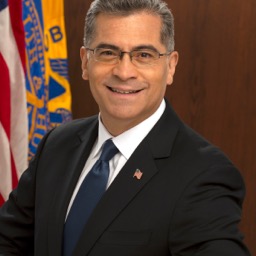 Xavier BecerraD · Democrat
Treat crime and addiction first as problems to prevent and treat.
Becerra has no standalone crime or public-safety platform; his campaign's priorities cover homelessness, health care and the economy, but not policing. Where he does address safety, he frames it around prevention and treatment. He calls homelessness a mental health crisis and promises Housing First 'always paired, where needed, with behavioral health and addiction treatment,' and he says someone sleeping outside 'shouldn't be treated as a criminal.' In a 2026 ACLU questionnaire he backed shifting some homelessness and mental-health calls to trained social-service responders, funding public defenders, and expanding civilian oversight of police. His record as attorney general cuts the other way on transparency: KQED reported he 'reflexively' resisted measures to open police-misconduct records. He has not stated a position on Proposition 36 or on retail-theft penalties.
- Frames homelessness and addiction as health problems: Housing First 'paired, where needed, with behavioral health and addiction treatment'
- Says people sleeping outside 'shouldn't be treated as a criminal' and should be offered support
- Backed shifting some homelessness and mental-health responses to trained social-service providers (2026 ACLU questionnaire)
- Supported funding public defenders and expanding civilian oversight of police
- As attorney general, resisted disclosure of police-misconduct records under California's police-transparency law
- Has not taken a public position on Proposition 36 or retail-theft penalties
- Reported: Becerra has no dedicated crime or public-safety platform. His positions here are drawn from his homelessness page, a 2026 ACLU questionnaire, and his record as attorney general, not a published crime plan.
- Reported: He has not stated a position on Proposition 36, Proposition 47, or specific retail-theft penalties, so those are left open here rather than inferred.
- Reported: His reform rhetoric sits in tension with his attorney-general record, when his office resisted releasing police-misconduct records under California's police-transparency law.
Sources
- Third-party2026 Gubernatorial Candidates (questionnaire)— ACLU California Action · January 1, 2026
“shift public safety responses to trained social service providers”
Accessed June 8, 2026 - News reportXavier Becerra Says He Will Fight for California. Who Did He Fight for as AG?— KQED · May 18, 2026
“reflexively have been against any of these measures to improve transparency”
Accessed June 8, 2026 - Campaign sitePriorities: Homelessness— Xavier Becerra for Governor (campaign site) · January 1, 2026
“always paired, where needed, with behavioral health and addiction treatment”
Accessed June 8, 2026 - Candidate statementAttorney General Becerra Calls for Broad Police Reforms and Proactive Efforts to Protect Lives— California Department of Justice, Office of the Attorney General · June 15, 2020
“improving public trust, increasing transparency and accountability”
Accessed June 8, 2026 - Campaign sitePriorities— Xavier Becerra for Governor (campaign site) · January 1, 2026Accessed June 8, 2026
- News reportHow will California's next governor handle homelessness?— CalMatters · May 6, 2026
“shouldn’t be treated as a criminal”
Accessed June 8, 2026
 Steve HiltonR · Republican
Enforce existing laws, reverse decarceration, and require treatment for addiction and mental illness.
Hilton runs on enforcing existing laws across the board. 'We need to get back to the basic principle that we should enforce the law,' his campaign site says, promising that people who commit crimes 'will be caught, prosecuted and convicted.' He blames Democratic policy and Gavin Newsom's prison closures for rising crime, and his plan would reopen shuttered prisons, replace corrections leadership, and undo parts of the Public Safety Realignment that moved offenders to county jails. He praises Proposition 36 and ridicules the old law that, he says, made 'theft under $950 a day legal.' The plan has a treatment side too: tying early-release credits to education or job training, expanding in-custody addiction and mental-health programs, and paying providers by results. On behavioral health he calls Housing First a 'complete disaster,' would redirect money to sober housing, and would clear encampments because, he says, street camping is against the law. He calls relying on jails as the state's mental-health system 'completely barbaric,' but declined to say whether he would change California's standard for involuntary treatment.
- 'We should enforce the law' across homelessness, drugs, theft and violent crime; back police and guarantee consequences
- Reopen closed state prisons and roll back parts of the realignment that sent offenders to county jails
- Supports Proposition 36; attacks the prior law that, he says, made 'theft under $950 a day legal'
- Pairs enforcement with rehabilitation: education-linked early-release credits and expanded in-custody treatment
- End Housing First and fund sober housing; clear encampments as illegal street camping
- Calls jails-as-mental-health-care 'completely barbaric' and would expand treatment beds, but didn't specify changes to involuntary-commitment rules
- Reported: His line that the prior law made 'theft under $950 a day legal' is misleading: Proposition 47 reclassified those thefts from felonies to misdemeanors in 2014, but they remained crimes.
- Reported: The figures on his site — 'violent crime up 23%' and arrest rates 'down to 30%' statewide — are his campaign's and are not independently verified here.
- Reported: He says much can be done administratively, but reopening prisons and reversing realignment would require budget and legislative action.
- Reported: He has not said whether he would change the legal standard California uses to order someone into involuntary mental-health treatment.
Sources
- Campaign siteSteve Hilton's Plan to Expand Prison Capacity and Fight Crime in California— Steve Hilton for Governor (campaign site) · January 1, 2026
“He shut down four state prisons, even as violent crime rose”
Accessed June 8, 2026 - Campaign siteSteve Hilton for California Governor: official campaign site— Steve Hilton for Governor (campaign site) · January 1, 2026
“get back to the basic principle that we should enforce the law”
Accessed June 8, 2026 - News reportHow will California's next governor handle homelessness?— CalMatters · May 6, 2026
“This is against the law, and the law needs to be enforced”
Accessed June 8, 2026 - News reportRepublican Steve Hilton promises 'real change' in California governor's race— Times of San Diego · May 29, 2026
“a lack of consequences has demoralized both law enforcement and residents”
Accessed June 8, 2026
What changed
- added
Added a state-prison population chart to show the scale of California's decarceration before comparing the candidates' prison and sentencing plans.
- added
Initial build: sourced background with three charts (CA crime-rate trend, the cross-state violent-crime ranking, and the opioid-overdose-death trend), plus Becerra and Hilton positions on crime, policing, prisons and behavioral health.