Education, childcare & workforce
71 pts apartCalifornia spends more per student than most states and has pushed graduation rates to record highs, yet its students still score below the national average and a wide achievement gap by race and income persists. The candidates split over whether the fix is more public investment or more choice, accountability, and parental control.
Last updated June 9, 2026
How would each improve schools and the workforce?
- Xavier Becerra (14/100) — Consistently on the public-investment side — defends public schools, opposes vouchers, and treats childcare and college as affordability problems for the state to ease. Off the pole because his 2026 platform is thin on specifics and leans on affordability framing rather than new education programs.
- Steve Hilton (85/100) — Squarely on the choice-and-accountability side: school grading, a parent trigger, education savings accounts, charter expansion, tenure limits, and an explicit 'not a funding problem' frame. Off the pole only because his savings-accounts plan starts narrow rather than universal, and he pairs choice with a tuition freeze.
The situation in California
California's roughly 5.8 million K-12 students are funded mainly through Proposition 98, the constitutional rule that sets a minimum share of the state budget for schools and community colleges. Per-pupil spending has climbed to about $20,000, above the national average in raw dollars though lower once the state's high costs are counted. On the 2024 NAEP, the main test used to compare states, California's fourth-graders scored a few points below the national average in math, and on the state's own Smarter Balanced exams fewer than half met the math standard. The state finished rolling out universal Transitional Kindergarten, free pre-K for every four-year-old, in 2025-26, and lifted the high school graduation rate to 87.5%. But chronic absenteeism, at roughly one in five students, remains well above its pre-pandemic level.
- 30th of 51
- School-system rank (2026)
- ~$20,200
- Per-pupil K-12 spending (FY2024)
- 4 points below
- 4th-grade math gap to U.S. (2024 NAEP)
- 87.5%
- High school graduation rate (Class of 2025)
- ~1 in 5
- Chronic absenteeism (2023-24)
- ~$22,000/yr
- Infant child care cost
- 20% vs. 70%
- Math proficiency gap by race (2025)
WalletHub ranks California's K-12 system 30th of the 50 states and D.C. on 32 measures (1st = best). The score blends student outcomes with school safety and does not adjust for the state's high costs.
California's current spending per student, above the U.S. average of about $17,600 — but not adjusted for the state's high labor and living costs.
California averaged 233 in fourth-grade math in 2024 vs. 237 nationally, below the national average.
A record high, up 4.5 percentage points since 2017, with gains across major student groups.
About 20% of students were chronically absent in 2023-24, down from a 30% pandemic peak but still above the pre-pandemic rate of about 12%.
Center-based infant care in California costs more than a year of in-state public-college tuition (about $8,786).
On the state's Smarter Balanced math test, 20% of Black and 26% of Hispanic students were proficient, versus 50% of White and 70% of Asian students.
California fourth-grade math scores remain below the national average
NAEP grade 4 math average scale score, public schools, 2000-2024 (0-500 scale)
California improved sharply from 2000 to the mid-2010s but remained below the national public-school average in every tested year shown. Scores fell during the pandemic period and partially recovered in 2024. NAEP did not test in 2020; 2024 figures come from the California state snapshot.
Chronic absenteeism more than doubled in the pandemic and is only partway back
Share of California students chronically absent, by school year (missing 10%+ of school days)
Before the pandemic, about 12% of students were chronically absent. The rate peaked at 30% in 2021-22 and had eased back to 20% by 2023-24, still well above the pre-pandemic level. These are the pre-pandemic, peak, and recovery reference points the state data marks; no comparable statewide rate is shown for the fully and partly remote 2019-20 and 2020-21 years, so the bars skip them rather than imply a straight line.
California's per-student spending runs above the U.S. average, but below New York and Illinois
Current per-pupil K–12 spending, FY2024 (nominal dollars, not cost-adjusted; California and five other large states)
These are nominal dollars, not adjusted for cost of living. Because California's labor and living costs are high, a cost-adjusted measure ranked it far lower (28th in 2021-22) before a recent funding increase lifted it to about 13th. Whether the state's spending is high enough is the core of the candidates' disagreement.
In California, child care costs more than college
Average annual cost in California, center-based care vs. in-state public-college tuition
Center-based infant care runs just under $22,000 a year and care for a four-year-old about $13,020, both more than the roughly $8,786 average in-state tuition at a four-year public college. Figures from an Economic Policy Institute report; the infant bar is rounded from 'just under $22,000.'
Math proficiency splits sharply by race on California's state test
Share of students meeting or exceeding the math standard, 2025 Smarter Balanced, by race/ethnicity
EdSource reports these differences have stayed 'essentially unchanged in a decade' and widened since the pandemic as the most vulnerable students recovered more slowly.
What's been tried
Since 2013 the Local Control Funding Formula has steered extra money to districts with more low-income students, English learners, and foster youth, and California now ranks among the most equitable states in how it spreads school dollars. The state put $4.1 billion into community schools and billions more into finishing universal Transitional Kindergarten. Higher education went the other way: facing a deficit, the state shelved the deep base cuts it had floated for the University of California and California State University in favor of payment deferrals to 2026-27, and both systems raised tuition. About 54% of graduates finish the A-G requirements needed to apply to a UC or CSU, and the state has expanded apprenticeships and Career Technical Education to widen non-college paths. Roughly one in eight public-school students now attends a charter school.
Where they differ
The clearest contrasts, sub-issue by sub-issue.
| Sub-issue | Becerra (D) | Hilton (R) |
|---|---|---|
| Is it a money problem? | Treats high costs and uneven funding as real; would expand help with childcare and defend school and college budgets. | Says no — with more than $22,000 spent per student, calls it 'a leadership and accountability problem.' |
| School choice | Long record against private-school vouchers; says little about charter schools. | Education Savings Accounts for low-income and special-needs students, cross-district enrollment, and easier charter conversion. |
| Teachers & accountability | Backs teachers and their unions; proposes no tenure or evaluation overhaul. | Grade every school A–F; require five years before tenure; names teachers' unions as the main obstacle. |
| Reading instruction | Has not taken a public position on a statewide phonics mandate. | Mandate phonics-based reading instruction statewide through executive action and Board appointments. |
| Childcare & early ed | Expand help with childcare; cites HHS work on early childhood and child-care worker pay. | No childcare plan; family agenda leans on faith-based and community support. |
| Public colleges | Defends UC and CSU funding and access; flags low CSU lecturer pay. | Freeze in-state tuition, push three-year degrees, and enforce race-neutral admissions under Proposition 209. |
Side by side
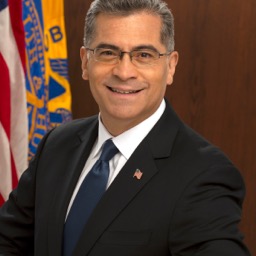 Xavier BecerraD · Democrat
Treat education mainly as an affordability issue: expand childcare help and workforce training, backed by a long pro-public-school, anti-voucher record.
Becerra has not published a detailed K-12 plan, and education is not among the priorities listed on his campaign site. What he does say points toward public investment: he frames childcare as part of the cost-of-living squeeze and promises to expand help with it, points to his work as U.S. Health and Human Services Secretary expanding early childhood education, and would build workforce and AI-training programs through public schools, libraries, and community colleges. His record points the same way — a 100% rating from the National Education Association and votes against private-school vouchers across two decades in Congress — and the California Faculty Association, which represents CSU professors, has endorsed him. He has said little about charter school, teacher tenure, or exactly how he would close the achievement gap.
- Frames childcare as a cost-of-living problem and pledges to 'expand help with childcare and essential costs'
- Cites his record as HHS Secretary, saying he 'led the fight to expand early childhood education'
- Build 'stackable workforce programs' for the AI economy through public schools, libraries, and community colleges
- Train healthcare workers through partnerships with community colleges and universities
- Long record against private-school vouchers; a 100% NEA rating and a CSU faculty-union endorsement
- Reported: Becerra has published no detailed K-12 plan and lists no education priority on his campaign site; CalMatters columnist Dan Walters wrote that the 'silence about this among the leading candidates for governor is deafening.' Several positions here are drawn from his record and his affordability framing, not a dedicated education platform.
- Reported: His strongest anti-voucher evidence is his congressional voting record (1993–2017), which predates this race and concerned federal policy.
Sources
- Campaign sitePriorities: Artificial Intelligence— Xavier Becerra for Governor (campaign site) · January 1, 2026
“Displacement without support is abandonment”
Accessed June 8, 2026 - Campaign sitePriorities: Economy & Affordability— Xavier Becerra for Governor (campaign site) · January 1, 2026
“expanding help with childcare and essential costs”
Accessed June 8, 2026 - Campaign sitePriorities: Health Care— Xavier Becerra for Governor (campaign site) · January 1, 2026
“train the next generation of nurses”
Accessed June 8, 2026 - Campaign siteXavier Becerra for Governor (home)— Xavier Becerra for Governor (campaign site) · January 1, 2026
“led the fight to expand early childhood education”
Accessed June 8, 2026 - Third-partyXavier Becerra on Education (congressional voting record)— OnTheIssues.org · January 1, 2017Accessed June 8, 2026
- News reportCalifornia's schools need attention, but candidates for governor are mostly silent— CalMatters (commentary, Dan Walters) · May 21, 2026
“silence about this among the leading candidates for governor is deafening”
Accessed June 8, 2026 - Third-partyCFA supports governor candidate Becerra at Sacramento State rally— California Faculty Association · May 14, 2026
“accessible public higher education”
Accessed June 8, 2026
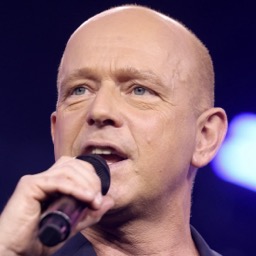 Steve HiltonR · Republican
Call the schools a failure of accountability, not money — mandate phonics, grade schools, expand choice, and freeze college tuition.
Education is one of Hilton's most detailed policy areas. He calls California's 'government-run schools' a scandal and argues that, with more than $22,000 spent per student, the problem is leadership and accountability, not funding. His K-12 plan would mandate phonics-based reading instruction, give every school a public letter grade tied to third-grade proficiency, let parents at a school graded D two years running trigger changes up to conversion to a charter school, and require five years in the classroom before a teacher earns tenure. He would create Education Savings Account (public funds families can spend on other schooling), starting with low-income and special-needs students, and open cross-district enrollment. For public colleges he would freeze in-state tuition, push three-year degrees, and enforce race-neutral admissions under Proposition 209. He names teachers' unions as the main obstacle.
- Argues it's 'a leadership and accountability problem,' not a funding one, noting California 'spends more than $22,000 per student'
- Mandate phonics-based reading instruction and give every school a public A–F letter grade
- Parent trigger: at a school graded D two years in a row, parents win the 'right to trigger administrative changes,' up to charter conversion
- Launch Education Savings Accounts (starting with low-income and special-needs students) and cross-district open enrollment
- Require 'five years of classroom experience before granting tenure'; freeze UC, CSU, and community-college tuition
- Reported: Hilton's campaign pages carry no publication dates and cite no source for the per-student figure; California's roughly $20,000 per-pupil spending is not adjusted for the state's high costs, which lower its national standing.
- Reported: He has published no childcare or early-childhood plan; his family agenda emphasizes faith-based and community support rather than state-funded childcare or Transitional Kindergarten.
- Reported: Reviving a working parent trigger and mandating phonics or tenure rules statewide would require legislation or State Board of Education action, not the governor acting alone.
Sources
- News reportWhere California's candidates for governor stand on education— EdSource · April 30, 2026
“outrageous scandal that we cannot tolerate any longer”
Accessed June 8, 2026 - Campaign siteSteve Hilton's Plan to Fix Public Education by 3rd Grade— Steve Hilton for Governor (campaign site) · January 1, 2026
“It is a leadership and accountability problem”
Accessed June 8, 2026 - Campaign siteMaking California's Public Colleges Affordable Again— Steve Hilton for Governor (campaign site) · January 1, 2026
“freeze in-state tuition at California”
Accessed June 8, 2026 - Campaign siteThe Family First Agenda— Steve Hilton for Governor (campaign site) · January 1, 2026
“Parents across California are being pushed aside”
Accessed June 8, 2026
What changed
- added
Added a NAEP fourth-grade math trend comparing California with the national public-school average from 2000 through 2024.
- added
Added a school-system rank to the situation snapshot: WalletHub places California 30th of the 50 states and D.C. on a blend of quality and safety measures.
- added
Initial build: sourced background on California school funding, test scores, childcare costs, higher education, community schools, charters, and the workforce, plus Becerra and Hilton positions on education.