Gas, electricity & energy prices
52 pts apartCalifornians pay the most in the country at the gas pump and the second-highest electricity rates of any state. The candidates split over whether those costs come down by regulating utilities and oil companies harder or by rolling back climate rules and expanding in-state supply.
Last updated June 9, 2026
How would each lower energy and gas costs?
- Xavier Becerra (38/100) — Leans on regulating utilities and stabilizing supply rather than deregulating, and keeps the climate goals, but pairs that with new openness to in-state oil production, which places him left of center rather than at the climate-first pole.
- Steve Hilton (90/100) — His program is deregulation and supply expansion across the board — repeal the fuel standard, overhaul cap-and-trade, restart drilling, end renewable mandates — placing him near the deregulate-and-expand pole, though he keeps nuclear and rooftop solar in the mix as a cheaper, cleaner alternative.
The situation in California
California's drivers pay more at the pump than any other state's, and its households pay the second-highest electricity rates in the country, behind only Hawaii. In March 2026 the average California home paid about 33 cents per kilowatt-hour, roughly 1.8 times the U.S. average, and residential rates here have climbed far faster than the national rate over the past decade. Much of the rise in electricity bills reflects the cost of wildfire prevention and grid upgrades that the investor-owned utilities pass on to their customers. Gasoline has run more than a dollar a gallon above the U.S. average, a gap that reflects the nation's highest fuel taxes, California's cleaner-burning blend, a refining market largely cut off from the rest of the country, and climate programs such as the Low Carbon Fuel Standard and cap-and-trade.
- 1st of 50
- Gasoline price rank (2026)
- ~33¢/kWh
- Residential electricity price
- +$1.31/gal
- Gasoline vs. the U.S.
- ~90¢/gal
- Taxes & fees at the pump
- ~42¢/gal
- Climate programs in the price
- Wildfire costs
- Major driver of rate hikes
- 62%
- Clean power share
California drivers pay the highest average gas price of any state, more than a dollar a gallon above the U.S. average (1st = most expensive). Its residential electricity rates rank second-highest, behind only Hawaii.
March 2026 average for a California home, about 1.8 times the U.S. average of about 18.6 cents and the second-highest of any state, after Hawaii.
California's 2025 average pump price ($4.41) ran about $1.31 a gallon above the U.S. average ($3.10), and is consistently among the nation's highest.
Federal, state, and local taxes added roughly 90 cents a gallon as of early 2025, the most of any state; the state excise tax alone rose to 61.2 cents in July 2025.
By the Energy Commission's estimate, the Low Carbon Fuel Standard (about 17 cents) and cap-and-trade (about 25 cents) together add roughly 42 cents a gallon.
The state's ratepayer advocate names the cost of wildfire prevention and liability, passed through by the investor-owned utilities, as one of the biggest reasons electricity rates have climbed since 2020.
Clean sources — renewables plus nuclear and large hydro — supplied about 62% of California's electricity in 2024, against a 100% target for 2045.
California's gas prices stay far above the national average
Average annual retail price of regular gasoline, California vs. U.S. ($ per gallon, nominal)
California gasoline has tracked above the U.S. average every year, and the nominal gap widened from about 74 cents a gallon in 2015 to roughly $1.31 in 2025. Figures are nominal annual averages, not adjusted for inflation.
Crude oil and refining are the biggest pieces of a California gas gallon
Estimated California regular gasoline price components, March 2026 ($ per gallon)
CEC's March 2026 estimate totals $5.26 per gallon. Taxes and fees combine the state excise tax, federal excise tax, state/local sales tax, and underground storage tank fee. California climate programs combine cap-and-trade and the Low Carbon Fuel Standard. Margins include costs and profits, and the CEC cautions that the figures describe the statewide market, not any one refiner or station.
California has the second-highest electricity rates in the country
Average residential price of electricity, March 2026 (¢ per kWh, highest-rate states)
Only Hawaii's households pay more than California's. The bars show the eight highest-rate states; the dashed line is the U.S. average of 18.56 cents per kWh, well below every state shown.
California's electricity rates have pulled away from the rest of the country
Average residential price of electricity, California vs. U.S. (¢ per kWh, nominal), 2015–2024
California's average residential rate rose from about 17.0 to 32.0 cents between 2015 and 2024, far outpacing the U.S. average (12.7 to 16.5 cents): roughly 88% growth here against about 30% nationally. Figures are nominal, not adjusted for inflation. Recent years are from EIA's Electric Power Annual; earlier years from its historical state price data.
What's been tried
California's energy tools pull in two directions. To cut emissions, the California Air Resources Board runs the Low Carbon Fuel Standard and the cap-and-trade market, which the Legislature extended through 2045 in 2025, and SB 100 commits the state to 100% clean electricity by 2045; clean sources supplied about 62% of California's power in 2024. To hold costs down, a 2023 law gave the Energy Commission power to penalize refineries for excess profits, but regulators set that penalty aside in 2025 as two refineries — Phillips 66 in Wilmington and Valero in Benicia — moved to shut down. On electricity, the argument is over who pays: a state ratepayer-advocate office estimates that the rooftop-solar credit known as net energy metering shifts billions of dollars a year onto customers without solar, a figure solar groups reject. A 2025 law also cleared the way for a cheaper E15 gasoline blend the state projects could trim pump prices.
Where they differ
The clearest contrasts, sub-issue by sub-issue.
| Sub-issue | Becerra (D) | Hilton (R) |
|---|---|---|
| Gas prices | Stabilize fuel supply and distribution to stop price spikes, without abandoning the state's climate goals. | Repeal the Low Carbon Fuel Standard, cut the gas excise tax, and reopen drilling to reach $3 gas. |
| Climate mandates | Keep the 2045 climate goals, but flex the pace if costs to families get too high. | Roll back climate regulations administratively, starting on day one. |
| Utility bills | Freeze utility rates and tighten oversight of the investor-owned utilities. | End the wind and solar mandates and subsidies he blames for high bills. |
| Refineries | Keep refineries running for supply stability during the transition. | Keep refineries open by scrapping the rules he says are forcing them to close. |
| Oil production | Open to more Kern County production over imports; calls oil companies part of the solution. | Expand in-state oil and gas production as much as possible, via CalGEM permits. |
| Power mix | A clean-energy transition with affordability protections built in. | Let natural gas, nuclear, and rooftop solar compete without renewable mandates. |
Side by side
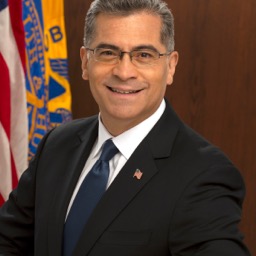 Xavier BecerraD · Democrat
Lower bills by regulating utilities and stabilizing fuel supply, while keeping the climate goals.
Becerra treats energy as an affordability problem inside the clean-energy transition. His signature move is a freeze on utility rates and home-insurance premiums while the state investigates why they keep climbing, paired with tougher oversight of the investor-owned utilities. On gasoline, he argues the answer is to stabilize fuel supply and distribution so prices stop spiking rather than to scale back the state's climate goals; 'we're never going backwards,' he says of its emission targets, though he would keep the 2045 target flexible if it collides with the cost of living. He has grown friendlier toward oil, saying California still needs companies like Chevron, signaling openness to more Kern County production over imports. He has not detailed how he would bring electricity rates down beyond the freeze.
- Freeze utility rates and home-insurance premiums while the state investigates the increases
- Tighten oversight and transparency of the investor-owned utilities
- Stabilize gas supply and distribution to curb price spikes rather than scale back the climate goals
- Keep the 2045 climate goals, but flex the pace if costs to families get too high
- Open to more in-state oil production over imports; calls oil companies part of the solution
- No detailed plan yet to lower electricity bills beyond the rate freeze
- Reported: The rate-and-premium freeze is a campaign pledge resting on an emergency declaration whose legal footing is untested; Becerra has not said how long it would last or how it would survive a court challenge.
- Inferred: He has not stated a position on the Low Carbon Fuel Standard or cap-and-trade by name; his support for keeping them is inferred from his 'never going backwards' framing on climate.
Sources
- Campaign sitePriorities: Energy and Utilities— Xavier Becerra for Governor (campaign site) · January 1, 2026
“Bill affordability will be at the center of my energy policy, especially for low- and middle-income families”
Accessed June 8, 2026 - News reportCalifornia 2026 governor's race: Where Becerra and Hilton stand on gas prices and environmental policy— CBS News · April 6, 2026
“stabilize the supply and stabilize the distribution of gas”
Accessed June 8, 2026 - News reportBecerra took over $150K from CA utilities as a candidate for Congress, AG— Energy and Policy Institute · April 28, 2026
“freeze on utility rates”
Accessed June 8, 2026 - News reportCalifornia governor candidates and the oil industry's money— Grist · May 26, 2026
“You need Chevron. I need Chevron.”
Accessed June 8, 2026 - News reportXavier Becerra fending off oil attacks in California governor's race— Yahoo News · May 29, 2026
“ambitious goals to phase out fossil fuels”
Accessed June 8, 2026
 Steve HiltonR · Republican
Reach $3 gas and cheaper power by repealing climate rules and expanding in-state supply.
Hilton makes energy the centerpiece of his affordability pitch, promising $3 gas and electricity bills cut in half, and he blames California's prices on Democratic climate policy. He says he can act largely through regulation rather than the Legislature. His gas plan would repeal or suspend the Low Carbon Fuel Standard, overhaul cap-and-trade, ease the refinery rules he says are closing plants like Valero's Benicia refinery, and reopen in-state oil production through the permitting agency CalGEM. On day one he would remove the chair of the California Air Resources Board and start rolling back climate regulations. For electricity, he would end the state's wind and solar mandates and the renewable credits utilities must buy, and let natural gas, nuclear, and rooftop solar compete without them. He also proposes cutting the gasoline excise tax by about half.
- Promises $3 gas and electricity bills cut in half
- Repeal or suspend the Low Carbon Fuel Standard and overhaul cap-and-trade
- Ease refinery rules to keep plants open and expand in-state oil production via CalGEM
- Remove the Air Resources Board chair on day one and roll back climate rules administratively
- End wind and solar mandates and renewable-credit purchases to lower power bills
- Cut the state gasoline excise tax by about 50%
- Reported: Hilton says he can deliver $3 gas and roll back most rules without legislation, through regulatory action alone; that legal theory is contested and untested, and the price target is a campaign goal, not a forecast.
- Reported: The pledge to cut electricity bills in half and the roughly 50% excise-tax cut are campaign figures; he has not published an itemized plan showing how either is reached.
Sources
- News reportRepublican Steve Hilton pitches affordability, change in California governor's race— ABC7 San Francisco · May 19, 2026
“I can do that through an agency called CalGEM”
Accessed June 8, 2026 - News reportGOP gubernatorial hopeful Steve Hilton courts California oil industry— New York Post (via AOL) · March 10, 2026
“California once had 40 refineries”
Accessed June 8, 2026 - News reportSteve Hilton's plan for cutting gas prices and affordable energy— California Globe · July 1, 2025
“remove Liane Randolph and start rolling back extreme climate regulations”
Accessed June 8, 2026 - News reportCalifornia 2026 governor's race: Where Becerra and Hilton stand on gas prices and environmental policy— CBS News · April 6, 2026
“repeal the low-carbon fuel standard, to change the way cap-and-trade taxes are levied, to change the refinery regulations, to”
Accessed June 8, 2026 - Campaign sitePolicy: Cut California's electricity bills by ending wind and solar farm mandates and subsidies— Steve Hilton for Governor (campaign site) · January 1, 2026
“End Renewable Energy Credits and Portfolio Mandates”
Accessed June 8, 2026 - Campaign sitePolicy: Gas Prices— Steve Hilton for Governor (campaign site) · January 1, 2026
“Suspend the Low Carbon Fuel Standard (LCFS), reformulation requirements, and other extreme and unnecessary refinery”
Accessed June 8, 2026 - News reportSteve Hilton lays out his plans to make the state 'Califordable' as governor— KPBS · May 6, 2026
“cut your electric bills in half”
Accessed June 8, 2026 - Candidate statementCalifornia Needs an Environmentalism That Actually Works (op-ed)— Newsweek · May 27, 2026
“I reject the idea that Californians have to choose between caring about the environment and caring about affordability”
Accessed June 8, 2026
What changed
- added
Added a CEC gasoline-price component chart so voters can see the relative size of crude oil, refining, taxes and fees, distribution, and state climate-program costs.
- added
Added a gas-price rank to the situation snapshot: California has the highest average gasoline price of any state.
- added
Initial build: sourced energy background with three charts (CA-vs-U.S. gas prices, the state electricity-rate ranking, and CA-vs-U.S. electricity-rate trends), plus Becerra and Hilton positions on gas, utilities, and climate rules.