Healthcare, Medi-Cal & drug costs
68 pts apartCalifornia has pushed its uninsured rate to a record low, largely through Medi-Cal and Covered California, but Medi-Cal now covers about a third of the state at a cost that strained the 2025 budget, and a new federal law threatens billions in funding. The candidates split over whom Medi-Cal should cover and whether to expand public coverage or lean on markets and cost control.
Last updated June 9, 2026
How would each handle healthcare and Medi-Cal?
- Xavier Becerra (12/100) — On the public-coverage side: defends and expands Medi-Cal, uses state buying power on drugs, and resists federal cuts. Not at the pole only because he has shelved a near-term single-payer push.
- Steve Hilton (80/100) — Firmly on the markets-and-cost-control side: he would end public coverage for undocumented adults, opposes single-payer, and leans on fraud reduction and market competition rather than new public programs. Not at the pole because his explicit agenda is narrow: it focuses on eligibility limits, with few detailed market-reform proposals.
The situation in California
Medi-Cal, California's Medicaid program, covers almost 15 million people — more than one in three residents — and the federal government pays roughly three-fifths of its cost. In 2024 the state's uninsured rate fell to 5.9%, a record low and below the national average of 8.2%, down from about 17% before the Affordable Care Act took effect. That coverage is now under two-sided pressure: covering low-income adults regardless of immigration status has cost the state more than projected, contributing to a 2025 budget shortfall, while the H.R. 1 (H.R. 1) adds work requirements and funding cuts that California analysts project could push roughly 3 million people off Medi-Cal by 2028.
- ~15 million
- Californians on Medi-Cal
- 5.9%
- Uninsured rate, 2024
- ~$197 billion
- Total Medi-Cal spending, 2025-26
- ~$8.5–10 billion/yr
- Cost of covering undocumented adults
- ~3 million
- Projected hit from 2025 federal law
- $55 / 5-pack
- CalRx insulin
More than one in three residents are covered by Medi-Cal, the state's Medicaid program (2025-26 estimate).
A record low, below the U.S. average of 8.2% and down from about 17% before the Affordable Care Act.
About three-fifths ($119.7B) is paid by the federal government and roughly $44.9B by the state General Fund.
Annual General Fund cost of full-scope Medi-Cal for low-income adults without legal status, more than double early projections, per the Legislative Analyst's Office. The state moved to freeze new enrollment for this group in 2026.
UC Berkeley analysts project up to 2.98 million fewer Californians on Medi-Cal by 2028 under H.R. 1's work requirements and cuts — a high-end estimate.
State-sponsored insulin pens reached pharmacies in January 2026, far below typical retail prices.
California's uninsured rate fell to a record low and dropped below the U.S.
Share of residents without health insurance, California vs. U.S. (ACS, % of population)
California's rate fell from about 17% in 2013, as Medi-Cal expansion and Covered California took effect, to 5.9% in 2024, while the national rate ticked back up. The Census Bureau did not publish a standard one-year ACS estimate for 2020, so 2020 is omitted and the line connects 2019 directly to 2021 across that one missing year.
About three-fifths of Medi-Cal's funding comes from Washington
Medi-Cal spending by source, 2025-26 (nominal $ billions)
Of about $197 billion in total Medi-Cal spending, roughly $119.7 billion (about 61%) comes from the federal government and $77 billion ($44.9B General Fund plus $32.1B other) from the state and other sources. That federal share is what the 2025 federal law exposes: its work requirements and financing changes reduce federal support, shifting cost to the state or to coverage losses.
Federal and state changes could cut Medi-Cal enrollment by about 3 million
Medi-Cal enrollment, 2025-26 estimate vs. UC Berkeley 2028 projection (millions)
The 2028 bar subtracts UC Berkeley Labor Center's projected 2.98 million enrollment reduction from the roughly 14.9 million Medi-Cal enrollment estimate for 2025-26. It is a projection of H.R. 1 and state budget effects, not an observed count, and the source describes it as a high-end estimate.
California's uninsured rate is below the U.S. average, though some big states are lower
Uninsured share of residents, 2024 (the 10 most populous states, %)
Comparing the 10 most populous states by rate rather than raw count, California (5.9%) sits below the U.S. average and most of its peers, though New York and Michigan are lower. Texas and Georgia, which have not expanded Medicaid, are highest.
What's been tried
California finished extending full-scope Medi-Cal to low-income adults of all ages regardless of immigration status in 2024. Facing a cost of roughly $8.5–10 billion a year for that group and a budget gap, the state moved in 2025 to freeze new enrollment for undocumented adults starting in 2026 and to add a monthly premium in 2027. Voters passed Proposition 35 in November 2024 to make the tax on health plans permanent and steer it to Medi-Cal provider payments. The state launched CalRx to make low-cost insulin, with $55 five-packs of insulin pens reaching pharmacies in January 2026, and created an Office of Health Care Affordability that set a 3.5% annual cap on health-spending growth. Enhanced federal subsidies that lowered Covered California premiums expired at the end of 2025.
Where they differ
The clearest contrasts, sub-issue by sub-issue.
| Sub-issue | Becerra (D) | Hilton (R) |
|---|---|---|
| Medi-Cal for undocumented immigrants | Opposes cutting it; calls covering low-income immigrants 'fiscally responsible' because the uninsured still use costly emergency care. | End full-scope coverage; redirect what he pegs at up to $20 billion a year to lower costs and wait times for citizens and legal residents. |
| 2025 federal Medicaid cuts (H.R. 1) | A day-one executive order to keep coverage continuous; would use state tools to blunt work requirements and funding cuts. | Says he supports the federal government's tightened Medicaid eligibility criteria; has laid out no detailed plan of his own. |
| Single-payer | Calls it the right long-term goal but says it isn't achievable now under the Trump administration; pursues incremental wins instead. | Opposes it, pointing to long wait times under the UK's government-run system. |
| Drug costs | Expand CalRx and use the state's purchasing power to negotiate lower prices, citing his record on Medicare drug pricing. | Has not stated a position on prescription drug prices. |
| How to control costs | Public buying power, Proposition 35 funding for Medi-Cal providers, and an employer fee on firms that shift workers onto Medi-Cal. | Target what he calls fraud in the healthcare budget through his proposed 'CalDOGE' efficiency unit; favors competition over new public programs. |
Side by side
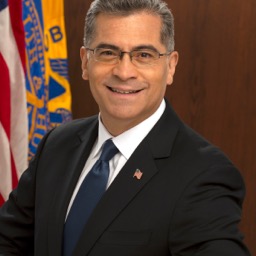 Xavier BecerraD · Democrat
Protect Medi-Cal from federal cuts and use the state's buying power to lower drug prices.
Becerra, who ran the U.S. Department of Health and Human Services and defended the Affordable Care Act in court as attorney general, makes healthcare his central issue. He promises a first-day executive order to keep coverage continuous against the 2025 federal cuts and opposes ending Medi-Cal for undocumented adults. He would expand CalRx and use the state's purchasing power to negotiate drug prices; as HHS Secretary he oversaw the first Medicare drug-price negotiations under the Inflation Reduction Act. He calls single-payer the right long-term goal but says it can't be done now under the Trump administration. For now he pursues incremental steps, including fully implementing Proposition 35 to fund Medi-Cal provider payments.
- Sign a day-one executive order directing state agencies to keep coverage continuous despite federal Medi-Cal cuts
- Opposes ending Medi-Cal for undocumented adults: 'I don't believe cutting health care is a good decision'
- Expand CalRx and use state purchasing power to negotiate lower drug prices
- Fully implement Proposition 35 to steer the health-plan tax to Medi-Cal provider payments
- Backs single-payer as a long-term goal but says it isn't feasible now; pursues immediate wins first
- Reported: His single-payer position is mixed: he calls it the right goal, but KQED reported he told the state doctors' lobby he doesn't support it now, and his campaign removed single-payer language from his site.
- Reported: His coverage-continuity pledge does not spell out how California would replace the federal Medicaid dollars it would lose if the 2025 cuts take full effect.
Sources
- News reportCalifornia front-runner Becerra says state won't 'take a knee' to Trump— American Community Media · June 1, 2026Accessed June 8, 2026
- Campaign sitePriorities: Health Care— Xavier Becerra for Governor (campaign site) · January 1, 2026
“directing state agencies to maintain coverage continuity for every Californian affected by federal cuts”
Accessed June 8, 2026 - News reportXavier Becerra backpedals on single-payer as he woos powerful doctors lobby— KQED · May 1, 2026Accessed June 8, 2026
- News reportFormer HHS Secretary Xavier Becerra rebukes Gov. Newsom's bid to end Medi-Cal for undocumented immigrants— ABC7 News · May 18, 2025
“I don't believe cutting health care is a good decision”
Accessed June 8, 2026 - News reportGovernor's race: Xavier Becerra and single-payer healthcare— Times of San Diego · May 23, 2026
“I have been an advocate for single payer”
Accessed June 8, 2026 - News reportWhat California's next governor could do on health care— CalMatters · November 14, 2025
“We will not go backwards”
Accessed June 8, 2026
 Steve HiltonR · Republican
End Medi-Cal for undocumented immigrants and redirect the savings to citizens and legal residents.
Hilton's healthcare message centers on one idea: stop covering undocumented immigrants through full-scope Medi-Cal and redirect what he estimates at up to $20 billion a year toward lower costs and shorter waits for citizens and legal residents. He ties Medi-Cal to his proposed 'CalDOGE' efficiency unit, which he says would root out government fraud, and opposes single-payer, citing long waits under the UK's government-run system. He has not published a detailed healthcare plan and did not respond when CalMatters sought his positions.
- End full-scope Medi-Cal for undocumented immigrants; redirect the savings to citizens and legal residents
- Argues taxpayers shouldn't 'subsidize health care for citizens of other countries'
- Would target what he calls fraud in the healthcare budget through his proposed 'CalDOGE' efficiency unit
- Opposes single-payer, pointing to wait times under the UK's National Health Service
- Says he supports the federal government's tightened Medicaid eligibility, and that competition, not new public programs, should lower costs
- Reported: Hilton has published no detailed healthcare plan; his campaign site has no healthcare section beyond the Califordable launch, and he did not respond to CalMatters' request for his positions. Several points here come from debate and interview remarks.
- Reported: His '$20 billion a year' figure is a campaign estimate; the Legislative Analyst's Office puts the General Fund cost of full-scope Medi-Cal for undocumented adults at roughly $8.5–10 billion a year.
- Reported: His support for the federal government's tightened Medicaid eligibility and for competition to cut costs comes from a June 2026 SF Public Press voter guide, not a detailed healthcare plan of his own.
Sources
- News reportCandidates clash on affordability, health care in California governor's race debate— ABC30 Fresno · May 6, 2026
“illegal immigrants who shouldn't even be in the country in the first place”
Accessed June 8, 2026 - News reportRestore the Ladder of Opportunity: Steve Hilton Vows Affordability, Immigration Compliance— American Community Media · May 25, 2026
“to subsidize health care for citizens of other countries”
Accessed June 8, 2026 - News reportWhat California's next governor could do on health care— CalMatters · November 14, 2025
“We will not go backwards”
Accessed June 8, 2026 - Campaign siteHilton Launches CALIFORDABLE Campaign to Fix California's Affordability Crisis— Steve Hilton for Governor (campaign site) · January 1, 2026
“make healthcare more affordable and readily available for working Californians”
Accessed June 8, 2026 - News reportIn California Governor Race, Single-Payer Is a Litmus Test— KFF Health News · May 8, 2026Accessed June 8, 2026
- News reportHow California's next governor could affect Latino communities— San Francisco Public Press · June 2, 2026
“encourage competition to drive down costs”
Accessed June 8, 2026
What changed
- added
Added a forecast-marked Medi-Cal enrollment chart showing the possible 2028 coverage loss under H.R. 1 and state budget changes.
- added
Initial build: sourced background on Medi-Cal, coverage, and drug costs, plus Becerra and Hilton positions on healthcare.