Home insurance, wildfires & climate risk
48 pts apartAs wildfires grow more destructive, private insurers have pulled back across most of California, pushing hundreds of thousands of homeowners onto the state's bare-bones FAIR Plan of last resort. The candidates split over whether to lean on the insurance commissioner to hold rates down or to let insurers price risk more freely so they come back.
Last updated June 9, 2026
How would each fix insurance and wildfire risk?
- Xavier Becerra (28/100) — Treats the crisis mainly as one of insurer accountability and public investment, leaning on the regulator and the courts rather than looser pricing.
- Steve Hilton (76/100) — Frames the fix as deregulatory: faster approvals and risk-based pricing to lure insurers back, rather than tighter rate control.
The situation in California
California's home-insurance market has been contracting for years. In 2023 the state recorded 788,485 homeowners-policy non-renewals (the state estimates only about a fifth to a quarter were insurer-initiated; the rest were homeowners switching carriers or selling), new policies written fell about 28% from 2020, and in 46 of the state's 58 counties non-renewals outnumbered new policies. As private insurers retreated, homeowners crowded onto the FAIR Plan, the state's FAIR Plan, whose residential policy count roughly tripled from about 242,000 in September 2021 to about 642,000 in September 2025. The January 2025 Los Angeles fires, which destroyed or damaged more than 18,000 homes and structures and caused tens of billions in insured losses, pushed the strained system further: the FAIR Plan faced billions of dollars in exposure and levied its first assessment on insurers since 1993, a charge of up to $1 billion that homeowners statewide help repay through surcharges. California's average premium is still below the national average, but it is rising faster.
- 1st of 50
- Homes at wildfire risk (2025)
- ~642,000
- FAIR Plan residential policies
- 788,485
- Homeowners non-renewals (2023)
- ~$20–40 billion
- LA fires insured losses
- up to $1 billion
- First FAIR Plan assessment since 1993
- 85% market share
- Coverage required in wildfire areas
California has more homes at elevated wildfire risk than any state, about 1.26 million. This is a count, so it partly reflects the state having the most housing units; Colorado and Texas rank next.
September 2025, up from about 242,000 in September 2021 as private insurers pulled back.
In 46 of 58 counties, non-renewals outnumbered new policies written. The state estimates only about 20–25% were insurer-initiated; the rest reflect homeowners switching carriers or selling.
Industry estimates for the January 2025 fires range from about $20 billion (JPMorgan) to $40 billion (Swiss Re). The fires destroyed or damaged more than 18,000 homes and structures.
Levied on insurers in February 2025 after the LA fires, the first such assessment in over 30 years; homeowners statewide repay about half through surcharges.
Lara's Sustainable Insurance Strategy lets insurers use catastrophe modeling if they write at least 85% of their statewide share in distressed areas.
California's insurer of last resort has roughly tripled since 2021
FAIR Plan residential policies in force, at the dates each source reports
Residential policies on the FAIR Plan, the state-created insurer of last resort, at the three dates the sources report: September 2021 and September 2025 (MoneyGeek) and February 2025 (CalMatters). Shown as snapshots rather than a connected line because the dates are unevenly spaced; nothing between them is interpolated. The climb reflects private insurers leaving the voluntary market, since the plan was designed as a narrow safety net.
Non-renewals outnumbered new California home policies in 2023
California homeowners market activity, 2023 policy count
MoneyGeek's compilation of California Department of Insurance data found 788,485 homeowners-policy non-renewals and 724,037 new policies written in 2023; in 46 of 58 counties, non-renewals outnumbered new policies. The state estimates only about 20-25% of non-renewals were insurer-initiated, so the bars show market churn, not only insurer cancellations. New policies were also down about 28% from 2020.
California's average home premium is still below the U.S. average
Average annual homeowners premium, end of 2025 ($), per Insurify
California's average (~$2,455) trailed the national average (~$2,948) at the end of 2025, per Insurify, which says California's strict regulatory system could constrain increases. The level matters as much as the trend. Insurify projects California premiums will rise about 16% in 2026, far faster than the 4% it projects nationally, so the gap is set to narrow.
What's been tried
The dispute runs through Proposition 103, the 1988 voter-approved law that requires the elected insurance commissioner to approve home-insurance rates before they take effect. Insurers say its rules kept rates from keeping up with wildfire risk; consumer groups credit it with holding rates down. Commissioner Ricardo Lara's Sustainable Insurance Strategy, rolled out through 2024–25, lets insurers use forward-looking catastrophe modeling and the cost of reinsurance in their rate filings for the first time, and in exchange requires companies that do so to write at least 85% of their statewide market share in wildfire-distressed areas, with the aim of moving people off the FAIR Plan. In October 2025 Governor Newsom signed a bipartisan package of bills (AB 1, AB 226, AB 234, AB 290, and SB 525) to shore up the FAIR Plan's finances and oversight. Whether these changes bring insurers back, and at what cost to homeowners, is still unsettled.
Where they differ
The clearest contrasts, sub-issue by sub-issue.
| Sub-issue | Becerra (D) | Hilton (R) |
|---|---|---|
| Rate regulation | Use the bully pulpit and the commissioner to hold rates down; threaten a freeze and investigations. | Let insurers price risk more freely; enforce Prop 103's existing 60-day approval deadline. |
| If insurers want higher rates | Call in the commissioner, push for a freeze, and open an investigation if they resist. | Act on rate filings within Prop 103's 60-day timeline so companies have predictable review. |
| How to price risk | Emphasizes claims, accountability, and holding rates down; would threaten a freeze if insurers resist. | Wants a 'stable, predictable environment for pricing risk' so insurers write coverage again. |
| The FAIR Plan | Has not detailed a FAIR Plan overhaul; emphasizes insurers honoring existing policies. | Move low- and moderate-risk homeowners off the FAIR Plan back to standard coverage. |
| Wildfire risk itself | Major public investment in wildfire prevention and home hardening; limit building in high-risk zones. | Emphasize vegetation clearing, defensible space, and forest management. |
| Lawsuits & litigation | Would investigate insurer claims-handling; willing to go to court to defend a rate freeze. | Require transparency in third-party litigation funding to stop 'profit-driven' lawsuits. |
Side by side
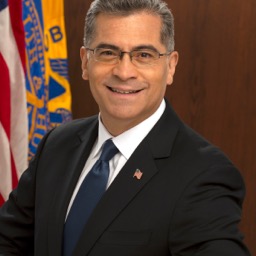 Xavier BecerraD · Democrat
Lean on insurers to hold rates down and pay claims, and invest heavily in wildfire prevention.
Becerra says he would call in the insurance commissioner and push for a freeze on home-insurance rates, declaring he is 'willing to go to court' to defend one if challenged. He would open investigations into how insurers handle claims, arguing customers who paid premiums for years still can't get answers. On the underlying risk, he backs major public investment in wildfire prevention and home hardening and would steer development away from the highest-risk areas.
- Call in the commissioner and push for a freeze on home-insurance rates
- 'I'd be willing to go to court' to defend a freeze if it is challenged
- Open investigations into insurer claims-handling and business practices
- Major public investment in wildfire prevention, flood control, and seismic retrofits
- Restrict new building in the highest-risk fire zones
- Reported: Whether a governor can order a rate freeze is legally disputed. Under Proposition 103, home-insurance rates are set by the elected insurance commissioner, not the governor, and insurers are generally entitled to rates that are not confiscatory, so a flat freeze would likely be challenged in court. Becerra has said he is willing to litigate the question.
- Reported: Becerra has not published a detailed plan for the FAIR Plan or for whether to keep, change, or roll back Lara's catastrophe-modeling rules; his stated focus is on claims, accountability, and prevention.
Sources
- News reportGovernor hopefuls lay out wildfire, insurance platforms— The Camarillo Acorn · April 25, 2026
“Every month, they paid their premiums”
Accessed June 8, 2026 - Campaign sitePriorities: California Disaster Preparedness & Resilience— Xavier Becerra for Governor (campaign site) · January 1, 2026
“I will fight for major investments in wildfire prevention, flood control, and seismic retrofits”
Accessed June 8, 2026 - News reportCalifornia Governor Candidates Grapple With Insurance Rate Fixes— Newsweek · May 20, 2026
“willing to go to court to tell you that I can call a freeze”
Accessed June 8, 2026
 Steve HiltonR · Republican
Let insurers price risk, enforce Prop 103's deadlines, and shrink the FAIR Plan back to a true last resort.
Hilton argues the market broke because rate approvals that Proposition 103 says should take 60 days now drag on for months or years, so insurers stopped writing policies. He would make that 60-day deadline a hard requirement and create what his campaign calls a 'stable, predictable environment for pricing risk' so companies write coverage again. He wants to move low- and moderate-risk homeowners off the FAIR Plan, which he notes grew from about 100,000 to more than 600,000 policyholders, and to require transparency in third-party litigation funding. On wildfires he stresses vegetation clearing and forest management.
- Make Prop 103's 60-day rate-approval timeline a 'real requirement,' ending delays
- Create a 'stable, predictable environment for pricing risk' so insurers return
- Get low- and moderate-risk homeowners off the FAIR Plan and back to standard coverage
- Require transparency in third-party litigation financing of insurance lawsuits
- Emphasize vegetation clearing, defensible space, and forest management
- Reported: Hilton's campaign calls for letting insurers price risk more freely but does not spell out whether he would extend Commissioner Lara's catastrophe-modeling and reinsurance rules. Consumer advocates warn that freer risk pricing tends to raise rates in high-risk areas as the trade-off for wider availability; Hilton's plan emphasizes availability over holding rates down.
Sources
- News reportGovernor hopefuls lay out wildfire, insurance platforms— The Camarillo Acorn · April 25, 2026
“Every month, they paid their premiums”
Accessed June 8, 2026 - Campaign siteCalifordable: Fixing California's Insurance Crisis (FAIR Plan)— Steve Hilton for Governor (campaign site) · January 1, 2026
“Get low- and moderate-risk homeowners off the FAIR Plan and back into standard policies, restoring it to its original role as a last-resort safety net.”
Accessed June 8, 2026 - Campaign siteCalifordable: Fixing California's Insurance Crisis— Steve Hilton for Governor (campaign site) · January 1, 2026
“Make the existing 60-day timeline under Proposition 103 a real requirement, ending delays and procedural abuse so insurers can operate with predictability.”
Accessed June 8, 2026 - Campaign siteCalifordable: Fixing California's Insurance Crisis (pricing risk)— Steve Hilton for Governor (campaign site) · January 1, 2026
“stable, predictable environment for pricing risk”
Accessed June 8, 2026 - Campaign siteA Modern Wildfire Prevention Plan for California— Steve Hilton for Governor (campaign site) · January 1, 2026
“vegetation management and emergency response”
Accessed June 8, 2026
What changed
- added
Replaced the new-policy-only chart with a same-year comparison of 2023 homeowners-policy non-renewals and new policies written.
- added
Added a wildfire-exposure rank to the situation snapshot: California has more homes at elevated wildfire risk than any other state, with a note that the count partly tracks its large housing stock.
- added
Initial V1 build: sourced background on the FAIR Plan, the private-market retreat, and the January 2025 fires, plus Becerra's and Hilton's positions on insurance regulation and wildfire risk.